Careers and Comparisons
Medical Assistant to LPN Bridge Programs
Is There a Medical Assistant to LPN Bridge Program?
Yes, but only a few colleges run one. Northeast Wisconsin Technical College and Lakeshore Technical College offer 24-credit bridges for certified medical assistants with 3,000 hours of recent work, and two Tennessee College of Applied Technology campuses credit 216 of the 1,296 practical nursing clock hours to certified MAs. Every bridge ends at the NCLEX-PN licensing exam. Start with an accredited medical assistant program, because the bridges ask for one.
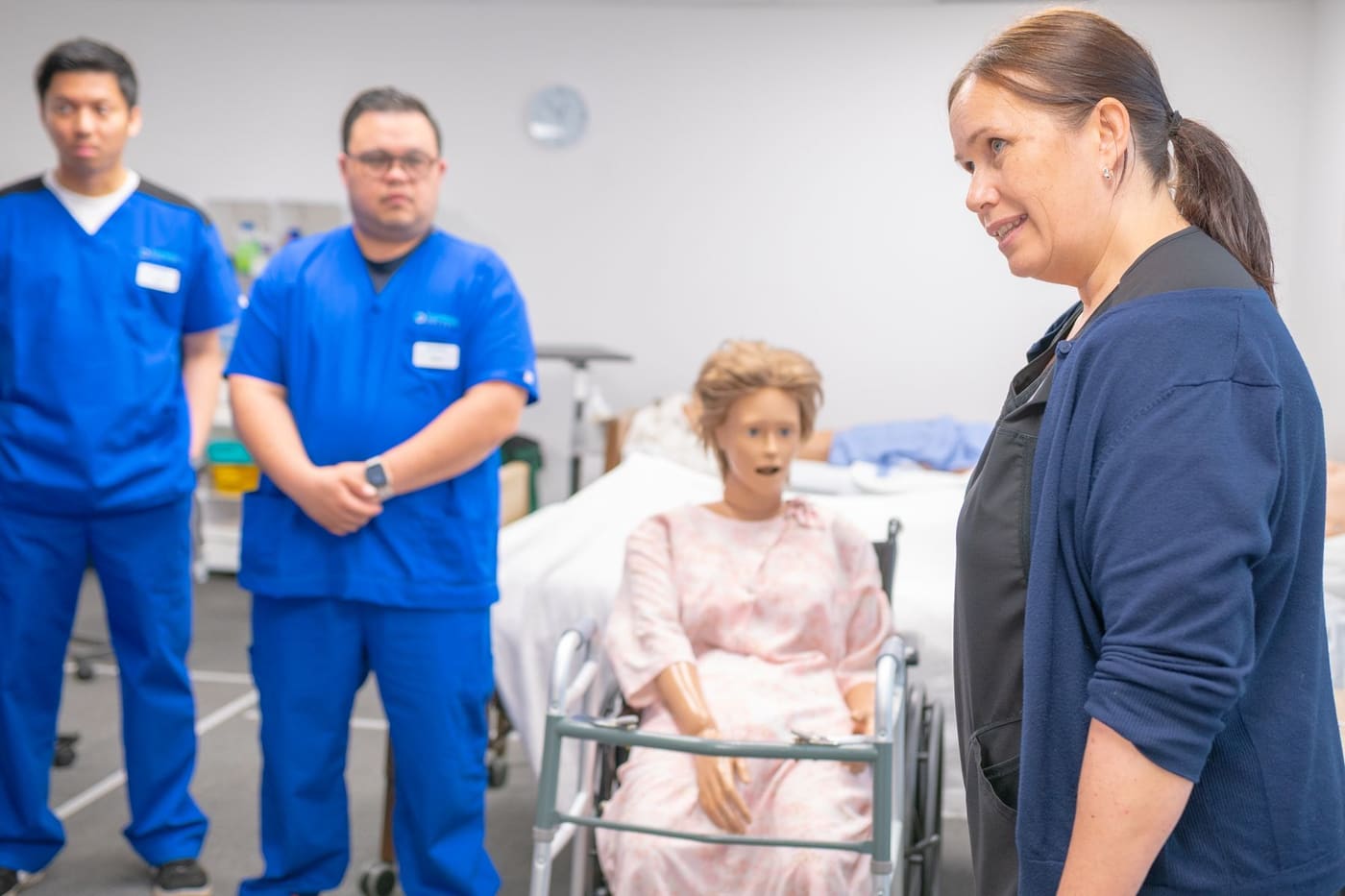
A medical assistant to LPN bridge program gives working medical assistants credit for what they already know, so they finish practical nursing school sooner. Only a handful of colleges run one. Below are the programs that do, what each asks for, how long they take and what they cost, plus what to do if none is near you.
Can You Bridge From Medical Assistant to LPN?
Yes, if you live near one of the few colleges that offer it. A bridge doesn’t skip nursing school. You still earn a practical nursing diploma or degree and pass the NCLEX-PN, the national licensing exam for practical nurses. What changes is the starting line: the school credits part of the program to your medical assistant training and certification.
An LPN (licensed practical nurse, called an LVN in California and Texas) works under registered nurses and doctors, often in nursing homes, hospitals and home health. A standard LPN program typically takes about 1 year, according to the BLS Occupational Outlook Handbook. Medical assisting is mostly outpatient clinic work, so the bridge spends its time on the nursing side: inpatient care, nursing pharmacology and clinical rotations.
Medical Assistant to LPN Bridge Programs Compared
These five pathways are named and described on each college’s own program page.
| College | Bridge | Credit for MA background | Length | Schedule |
|---|---|---|---|---|
| Northeast Wisconsin Technical College (Green Bay, Marinette) | MA to Practical Nursing Bridge, technical diploma | 24-credit bridge track | 4 semesters, 14 months | Part time, evenings, Spring start |
| Lakeshore Technical College (Cleveland, WI) | MA Bridge to Practical Nursing | 24-credit bridge track | 3 terms | Evenings, some Saturdays, Summer start |
| TCAT Jackson (Brownsville/Haywood campus, TN) | Certified MA to PN Bridge, diploma | 216 of 1,296 clock hours | 12 months | Part time, nights and weekends |
| TCAT Nashville (TN) | Certified MA to PN Bridge, diploma | 120 clock hours for certification, 96 for A&P | 16 months | Mon, Tue, Thu evenings, alternating Fri and Sat |
| Green River College (WA) | MA-C to PN Pathway, 90-credit AAS | 2 credits by skills exam | Full AAS program | Same as the LPN program |
The Wisconsin and Tennessee programs are built for people who keep working. Each runs in the evenings or part time, which matters if your MA paycheck covers rent while you study.
Who Qualifies for an MA to LPN Bridge?
Every bridge asks for proof that you’re already a trained, credentialed medical assistant. The details differ:
- NWTC: you need to have graduated from an accredited medical assistant program that included Pharmacology for Allied Health, plus 3,000 hours as a certified MA within the past 3 years, with recent work in the last 12 months. Without certification, NWTC accepts 6,000 hours of work. You also complete oral communication, developmental psychology and English composition first.
- Lakeshore: you need MA certification or registration and 3,000 hours within the past 3 years, or 6,000 hours if you’re not credentialed.
- TCAT Jackson and TCAT Nashville: you need a current medical assistant certification from an accredited institution (Nashville names the Certified Clinical Medical Assistant), a high school diploma or equivalent, age 18 or older, and a passing HESI entrance exam score. Admission is competitive and point-based.
- Green River: you need an active, unencumbered Washington MA-C license (Washington’s state medical assistant credential) and transcripts from the MA-C program, plus every regular LPN prerequisite with at least a 2.5 in each course and a 3.0 overall.
The pattern is clear: certification opens the door. If you’re choosing a medical assistant program now with nursing in mind, pick one that prepares you for a national exam. The medical assistant certification guide compares the CMA, RMA, CCMA and NCMA, and the CMA (AAMA) exam requires an accredited program. NWTC’s own medical assistant diploma holds CAAHEP accreditation, so its graduates line up with its bridge.
How Long Does a Medical Assistant to LPN Bridge Take?
Plan on 12 to 16 months of part-time study once you’re admitted. TCAT Jackson lists 12 months and TCAT Nashville 16 months, on a practical nursing program of 1,296 clock hours. Both credit 216 of those hours to certified MAs, which leaves about 1,080 to finish. NWTC’s part-time track takes 4 semesters, or 14 months.
Add time before the first nursing class. NWTC’s general education courses come first, and its admissions guide warns that waitlists can run longer than 6 months. Lakeshore takes bridge students only in Summer, and TCAT Nashville’s next bridge class starts in September 2027.
For comparison, the medical assistant training itself usually runs under a year. The how long medical assistant school takes guide breaks that down by credential.
What Does an MA to LPN Bridge Cost?
TCAT Nashville publishes the clearest figure: $5,024 in total tuition and fees, plus $2,212.50 for textbooks and supplies, for the whole 16-month bridge. The Wisconsin colleges list the bridge at 24 credits and price it at their per-credit technical college rate, so check each one’s tuition page for the current figure.
The medical assistant school cost guide explains federal aid and other ways to pay, and the same tools apply when you return for the nursing step.
Can You Do an MA to LPN Bridge Online?
No. Every bridge listed here meets in person. Lakeshore says its bridge is in person only, and NWTC runs evening classes on campus with clinical shifts that can start as early as 6 a.m. Nursing licensure needs supervised clinical hours with real patients, so expect labs and clinicals even when some general education courses are available online.
The medical assisting half of the path is different. A hybrid or online medical assistant program can cover the coursework, though you’ll still complete a hands-on externship. An administrative-only credential, like the ones in the online medical administrative assistant course guide, won’t qualify you for a clinical nursing bridge.
Is There a Medical Assistant to RN Bridge?
Not as a single step. Registered nurses earn a bachelor’s degree in nursing, an associate degree in nursing, or a diploma from an approved program, according to the BLS. The faster route for an MA is usually two bridges: MA to LPN, then LPN to RN.
LPN to RN bridges are far more common than MA to LPN bridges. At Columbia State Community College in Tennessee, licensed LPNs finish the associate degree in three continuous semesters starting in Summer, and the college posts 13 credit hours for two first-year nursing courses. That’s also why TCAT bridges matter: a Tennessee MA can go from medical assistant to LPN to RN at public colleges in the same state.
CMA or LPN: What Pays More?
LPNs earn more. The BLS median was $64,400 for LPNs in May 2025, against $45,690 for medical assistants. Registered nurses earned a median of $97,550. The pay gap is the reason most MAs look at a bridge, and the medical assistant salary and careers guide shows MA pay in your state.
That gap has a cost in time. You’ll work as a certified MA for the 3,000 hours the Wisconsin bridges ask for, roughly a year and a half full time, before you start. Many MAs use that stretch to finish the general education prerequisites at night.
Planning the Path From MA to LPN
If you want nursing eventually, set up the medical assistant step so it counts later:
- Choose an accredited program. NWTC asks for an accredited MA program, and accreditation keeps the CMA (AAMA) exam open to you. The accredited medical assistant programs list shows which ones are.
- Get certified soon after you finish. Every bridge here asks for a credential, and the work-hour clock at NWTC counts hours as a certified MA.
- Work in a clinical role. Bridges count clinical MA hours, so a front-desk job doesn’t build toward them.
- Take the general education courses early. English, psychology and anatomy and physiology carry over to nursing, and TCAT Nashville credits 96 clock hours for passing A&P.
- Apply as soon as you’re eligible. Waitlists and single yearly starts can add months.
If no bridge runs near you, the standard LPN program still works. Your clinical skills and comfort with patients will help, even without formal credit. The medical assistant vs CNA comparison covers the other common first step into nursing if you’re still deciding where to start, and the state pages for Wisconsin, Tennessee and Washington list the medical assistant programs in each bridge state.
Frequently Asked Questions
Can I Become an LPN After Working as a Medical Assistant?
Yes. You can enter any state-approved practical nursing program like any other applicant, or use a bridge if one runs near you. Either way you finish a practical nursing diploma or degree and pass the NCLEX-PN before you can work as an LPN.
Does a CCMA Count for an MA to LPN Bridge?
At TCAT Nashville it does: the bridge asks for current certification as a Certified Clinical Medical Assistant. The Wisconsin bridges ask for MA certification or registration, so check the exact credential each school lists before you test. The certification comparison shows who can sit the CMA, RMA, CCMA and NCMA exams.
Does Medical Assistant Training Count Toward LPN Prerequisites?
Usually not. Green River College states that MA-C training does not count toward its LPN prerequisite coursework, and NWTC still requires oral communication, developmental psychology and English composition before the bridge. The credit you get replaces nursing courses, not general education.
How Many Hours Do You Need to Work as a Medical Assistant First?
At NWTC and Lakeshore, 3,000 hours within the past 3 years if you're certified, or 6,000 hours if you're not. The Tennessee and Washington pathways ask for the credential rather than a set number of work hours.
Guides on This Topic
- Medical Assistant Salary and CareersWhat medical assistants earn nationally and in every state (BLS OEWS), the spread from entry level to the top tenth, and the roles the job leads to
- Accredited Medical Assistant Programs339 programs
- Medical Assistant CertificationThe four national medical assistant certifications, who can sit each exam and which programs prepare you for them
- Medical Assistant vs CNAMedical assistants and nursing assistants compared on training, duties, workplaces, certification and BLS pay, with phlebotomists alongside
More From the Blog
- How to Verify a Medical Assistant CertificationNational medical assistant certification verification: where to look up a CMA, RMA, CCMA or NCMA, what you search by, and what each status means.
- Medical Administrative Assistant Online CoursesMedical administrative assistant online courses compared: credit certificates from $1,368, self-paced CMAA courses, exam rules and what they lead to.
- Medical Assistant Training in Houston, TXMedical assistant training in Houston, TX: 12 local schools compared on 2026 cost, weeks, externship hours and CAAHEP status, plus Houston MA pay.
Sources
- NWTC: Medical Assistant to Practical Nursing Bridge, Technical Diploma
- NWTC: MA to PN Bridge Admissions Guide
- Lakeshore Technical College: Medical Assistant Bridge to Practical Nursing
- TCAT Jackson: Certified Medical Assistant to Practical Nursing Bridge
- TCAT Nashville: Certified Medical Assistant to Practical Nursing Bridge
- Green River College: Medical Assistant-Certified to Practical Nursing Pathway
- Columbia State Community College: LPN to RN Pathway Options
- BLS Occupational Outlook Handbook: Licensed Practical and Licensed Vocational Nurses
- BLS Occupational Outlook Handbook: Medical Assistants
- BLS Occupational Outlook Handbook: Registered Nurses