Career Guide
How to Become a Medical Assistant
How Do You Become a Medical Assistant?
Here is how to become a medical assistant: finish high school or a GED, complete a certificate, diploma or associate program with an externship, then pass a national exam such as the CMA, RMA, CCMA or NCMA. Most of the 1,340 programs verified for this site take 39 to 40 weeks, and 936 include a supervised clinic externship. If you want the CMA (AAMA), pick one of the 339 programs accredited by CAAHEP or ABHES; compare them on the accredited programs page.
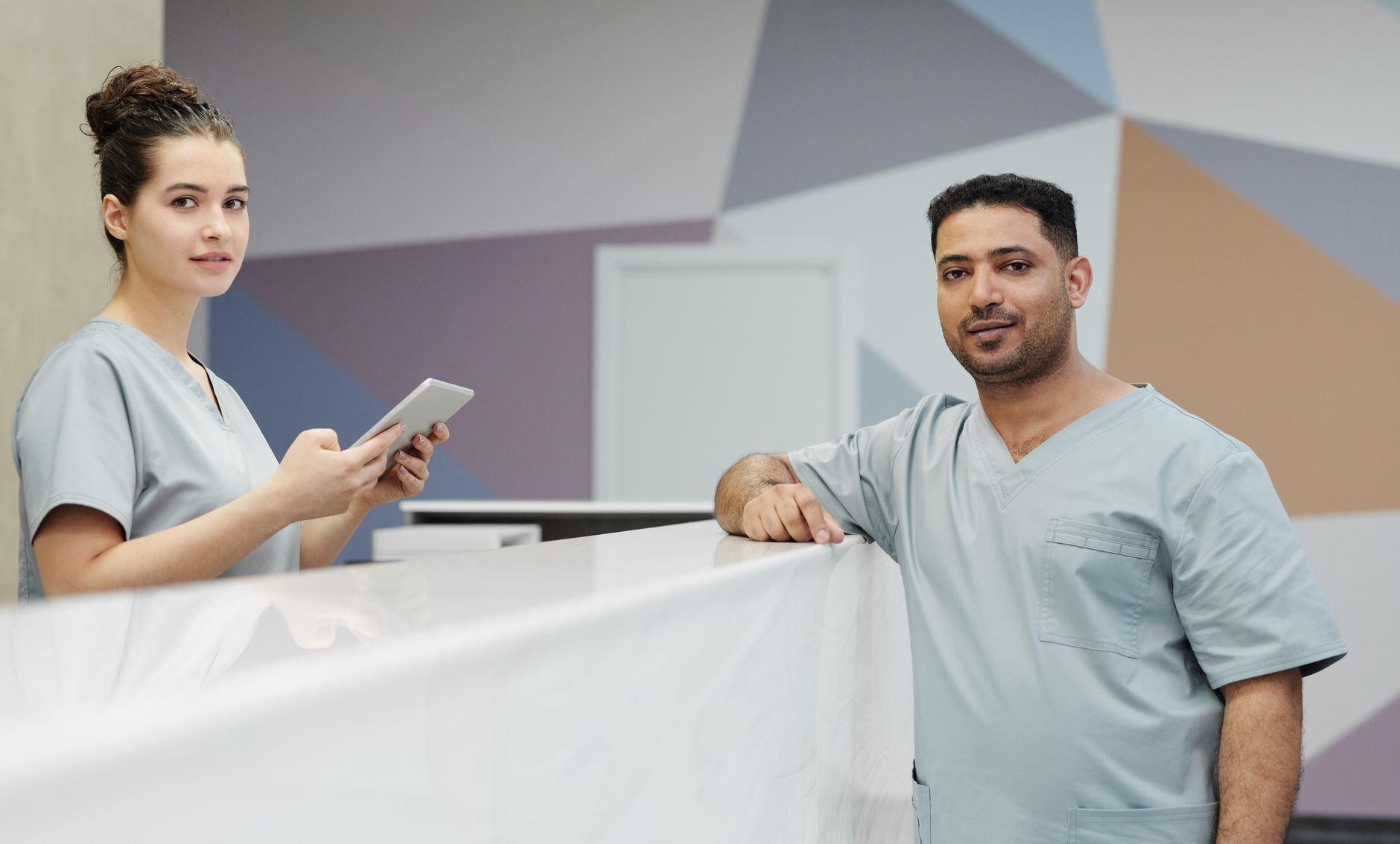
How to Become a Medical Assistant in Eight Steps
Order matters here, so this is the one list on the page that is numbered. The training itself takes a median of 40 weeks.
- Finish high school or a GED. NHA and NCCT both ask for one before they certify you, and most programs require it to enroll.
- Pick a program type. A certificate or diploma takes a median of 39 to 40 weeks; an associate degree takes a median of 78 weeks.
- Decide whether you want the CMA (AAMA). If you do, choose one of the 339 programs accredited by CAAHEP or ABHES. That choice has to happen before you enroll.
- Complete your classes and skills labs. Expect anatomy, medical terminology, pharmacology, vital signs, injections, and often phlebotomy and EKG.
- Finish the externship. This is unpaid, supervised work in a clinic, usually 160 to 200 hours at the end of the program.
- Pass a national certification exam: the CMA (AAMA), RMA (AMT), CCMA (NHA) or NCMA (NCCT).
- Check your state’s rules. Washington, for one, issues its own medical assistant credential.
- Keep your credential current. The CMA (AAMA) renews every 60 months with 60 continuing education points. The CCMA renews every two years with 10 CE credits.
The certification pathway tool shows which exams your situation qualifies you for.
Medical Assistant Requirements Before You Apply
The entry bar is low. You don’t need prior healthcare experience or college credit for most certificate and diploma programs. What you do need:
- A high school diploma or GED. NHA lets you sit the CCMA if you are scheduled to earn one within the next 18 months.
- Time for a full-time externship. Even evening programs often place you in a clinic during weekday hours for several weeks. Florida State College at Jacksonville runs its certificate in 8 months by day or 12 months in the evening, but its 190-hour externship is Monday to Friday, 8am to 5pm, for 5 weeks.
- A plan for the cost. Totals run from about $1,000 at some community colleges to an estimated $59,664 for the most expensive private associate degree, so budget before you apply.
Community colleges with competitive programs may add prerequisite courses. Lewis-Clark State College and Southern Regional Technical College both open with a semester of prerequisites before the medical assisting courses start.
Which Program Type Fits You?
There are four kinds of programs. The numbers below come from 1,340 programs checked on the schools’ own sites in October 2026.
| Program type | Programs | Median length | Median hours or credits | CAAHEP or ABHES accredited | Median published total |
|---|---|---|---|---|---|
| Certificate | 614 | 39 weeks | 800 clock hours or 36 credits | 185 | $14,500 |
| Diploma | 390 | 40 weeks | 800 clock hours or 43 credits | 99 | $17,519 |
| Associate degree | 309 | 78 weeks | 1,215 clock hours or 63 credits | 55 | $28,238 |
| Non-credit training | 27 | 26 weeks | 560 clock hours | 0 | $5,040 |
If you need to work fast, a certificate is the usual answer. Contra Costa Medical Career College’s clinical certificate runs 10 weeks and 320 clock hours, including a 160-hour externship, for a published $6,942. Manchester Community College’s non-credit program in New Hampshire takes 12 weeks and 480 hours for $5,800.
If you want a degree to build on later, an associate degree adds general education courses to the medical assisting core and ends in a college degree. It costs more time: a median of 78 weeks. Central Arizona College’s AAS is CAAHEP accredited, runs 60 credits with a 4-credit practicum, and is estimated at $5,400 (published rate times credits, before fees).
If you want the CMA (AAMA), program type matters less than accreditation. Accredited options run from Carteret Community College’s two-semester certificate in North Carolina, with an estimated cost of $1,064 (published rate times credits, before fees), to South University-Savannah’s CAAHEP-accredited associate degree, estimated at $43,700.
Non-credit programs are the shortest, but none of the 27 is accredited, and 13 of them name the CCMA as their exam.
What You Learn and Where the Externship Fits
Every program teaches the same core: anatomy and physiology, medical terminology, infection control, vital signs, patient intake, medical law and office procedures. The clinical skills vary more than people expect.
- Phlebotomy: listed by 657 programs
- EKG: 570 programs
- Pharmacology: 468 programs
- Billing and coding: 365 programs
- Limited X-ray: 28 programs
Limited X-ray is rare and worth seeking out only if you plan to work where state rules allow medical assistants to take basic X-rays. Northbridge University (formerly NUC University) in Florida teaches it in a 12-month, 63-credit hybrid diploma that names the NCMA exam. The school conferred 663 medical assisting awards in 2022-23, the most of any school in the set.
The externship is where you practice on real patients under supervision. Across the programs that state hours, the median is 180. Longer is better for confidence and job leads: UEI College-Phoenix schedules 250 hours, while Pima Medical Institute-Tucson’s hybrid certificate has a 200-hour externship completed in person over 5 weeks.
Online and hybrid formats only move the classroom part. Of the 1,340 programs, 508 put coursework online or in a hybrid format, and just 13 are listed as fully online. Your skills checks and externship still happen in person. The online programs guide lists which schools arrange the clinic placement for you.
What Medical Assistant School Costs
Cost depends mostly on who runs the school. Public community colleges and technical centers charge by the credit or clock hour at local rates. Private career schools publish a single program total that bundles tuition, books, scrubs and often an exam voucher.
- Low end: Carteret Community College, estimated at $1,064 (published rate times credits, before fees), and Olympic College in Washington, estimated at $1,361.
- Typical private diploma: Unitek College publishes $20,100 for a 33-week hybrid diploma with a 184-hour externship.
- High end: associate degrees such as South University-Savannah’s, estimated at $43,700 for 92 quarter credits.
The median published program total across 659 programs is $16,495. The MA cost calculator adds fees, books and lost work hours so you can compare real totals. The full breakdown is on the medical assistant school cost page.
The Route to Your First Medical Assistant Job
- TrainFinish an MA program1,004 certificates and diplomas, 309 associate degrees; median 40 weeks
- PracticeComplete the externship936 programs include one, median 180 hours
- CertifyPass a certification examCMA (AAMA), RMA (AMT), CCMA (NHA) or NCMA (NCCT); 339 programs are CMA-eligible
- WorkStart as a medical assistant$45,690 national median pay (BLS, May 2025)
| Credential | Programs | Median length | With an externship |
|---|---|---|---|
| Certificate | 614 | 39 weeks | 455 |
| Diploma | 390 | 40 weeks | 295 |
| Associate degree | 309 | 78 weeks | 169 |
| Non-credit training | 27 | 26 weeks | 17 |
Counted from the 1,340 verified programs' own pages, October 2026. Length converted to weeks from each school's wording; blank cells mean too few programs state it.
Do You Need a Medical Assistant License?
In most states, no. The BLS notes that most states don’t require certification, though employers may prefer or require it. There is no national medical assistant license. What exists instead is a set of state rules about which tasks a medical assistant may perform, plus a handful of state credentials.
Washington issues its own credential. To become a Medical Assistant-Certified through the Department of Health, you complete a CAAHEP- or ABHES-accredited program, or a program at an accredited school with at least 720 clock hours including an externship of at least 160 hours, or a state registered apprenticeship. You then pass one of five national exams, including the CMA, RMA, CCMA and NCMA, within five years before applying. An interim certification covers you for up to a year while you test. See the Washington medical assistant programs page for schools there.
California doesn’t license medical assistants at all. The Medical Board of California describes them as unlicensed and says they work without needing a certification. A medical assistant who completes the minimum training set by regulation may give injections and draw blood. The California programs page lists 187 verified options.
Elsewhere, the BLS notes that the tasks a medical assistant may do vary by state. Check your state medical board’s page before you assume a skill you learned, such as injections or X-ray, is one you can use on the job.
Choosing a Certification Exam
All four national credentials are respected by employers, but they open on different terms.
| Credential | Certifying body | Who can test | Cost and upkeep |
|---|---|---|---|
| CMA (AAMA) | American Association of Medical Assistants | Students and graduates of CAAHEP- or ABHES-accredited programs, or graduates who qualify for the Alternative Pathway | $125 for students and recent graduates; recertify every 60 months |
| RMA (AMT) | American Medical Technologists | Graduates of an accredited program with 720 hours, including 160 externship hours, or 3 years of work within 7 | $150, covering application, exam and first annual fee |
| CCMA (NHA) | National Healthcareer Association | Graduates of any MA training program within 5 years, or 1 to 2 years of supervised work | Renew every 2 years with 10 CE credits |
| NCMA (NCCT) | National Center for Competency Testing | Students and graduates of NCCT-authorized schools, or 1 year of full-time work within 5 years | $119 exam fee |
The exam your program names matters. Of the 1,340 programs, 450 name the CMA, 331 the RMA, 299 the CCMA and 133 the NCMA. Many name several. Ivy Tech Community College’s technical certificate is CAAHEP accredited and names the CMA; its Evansville campus reports a 97.18% CMA (AAMA) pass rate as a five-year average. The full comparison is on the medical assistant certification page, with detail on the CMA and CCMA.
Can You Work as a Medical Assistant Without Certification?
Yes, in most states, and many people start that way. But certification shapes which jobs you can get. Employers may prefer or require it, and some states tie specific tasks or credentials to a passed exam, as Washington does.
The practical point: certify while the material is fresh. CMA students in accredited programs can register before the externship ends. The CCMA training route stays open for 5 years after you finish a program, and the RMA education route for 4 years.
What the Job Pays and How Fast It’s Growing
The BLS counted 817,870 medical assistants in May 2025, with a median wage of $45,690 a year, or $21.97 an hour. The middle half earned between $38,470 and $49,180.
Demand is strong. BLS projects employment to grow 13% from 2025 to 2035, with about 109,700 openings a year. Colleges conferred 47,717 medical assisting awards in 2022-23, according to IPEDS. The medical assistant careers guide covers settings and specialties.
How to Choose a Program: A Checklist
Use these points to narrow the list, each tied to something you can check on a program’s page:
- Accreditation, if you want the CMA. Only 339 of the 1,340 programs carry CAAHEP or ABHES accreditation. The accredited program checker confirms a program in seconds.
- Externship hours and placement. Look for 160 hours or more and ask whether the school finds the site. A 40-hour externship, like Charles A Jones Career and Education Center’s, gives you far less clinic time than the 180-hour median.
- Skills you will use. Phlebotomy is listed by 657 of the 1,340 programs and EKG by 570. If local job postings ask for them, make sure they are taught.
- Published outcomes. Many programs post exam pass and job placement rates on their own pages. Olympic College reports five-year averages of 93% exam passage and 70% placement.
- Schedule. 298 programs offer evening classes and 25 weekends. Cabarrus College of Health Sciences runs an 11-month accredited diploma on evenings and weekends.
- Whether the program is admitting. Technical College of the Rockies has closed its certificate to new applications, and some listings, such as Highline College’s 19-credit pathway, are bridges for working medical assistants rather than full training.
The program matcher filters the full list by state, schedule, cost and exam, and the medical assistant programs hub ranks all of them.
Frequently Asked Questions
Can You Become a Medical Assistant Without Going to School?
Yes, through work experience, though it is the slow route. AMT's work experience route for the RMA takes 3 years of full-time medical assistant work within the past 7 years. NHA accepts 1 year of supervised medical assisting work within the last 3 years, or 2 years within the last 5, for the CCMA. You need an employer willing to train you first.
Do You Need a High School Diploma to Be a Medical Assistant?
For the national exams, yes. NHA requires a high school diploma or GED for the CCMA, or that you are scheduled to earn one within 18 months. NCCT asks NCMA candidates whether they hold a high school diploma or GED. Most programs also ask for one at enrollment.
Can You Take the CMA Exam Before You Graduate?
Yes, if your program is accredited by CAAHEP or ABHES. The AAMA lets completing students register once all classroom coursework is done, before the practicum or externship ends. The fee for students and recent graduates is $125.
Is Medical Assistant School Hard?
It is demanding but built for career starters. Expect anatomy, medical terminology, pharmacology and math for dosages, plus hands-on checks in skills such as injections and blood draws. The AAMA Alternative Pathway, for example, expects at least 10 injections and 10 successful blood draws during training.
Can You Become a Medical Assistant Online?
Only partly. Coursework can be online, but the externship and skills checks are in person. Of the 1,340 programs verified, 508 offer online or hybrid coursework and only 13 are listed as fully online; see the online programs guide for which ones fit.
How Much Do Medical Assistants Make?
The BLS reports a median of $45,690 a year ($21.97 an hour) for medical assistants in May 2025. The lowest-paid 10 percent earned under $36,050 and the highest-paid 10 percent over $59,310.
Keep Reading
- Medical Assistant CertificationThe four national medical assistant certifications, who can sit each exam and which programs prepare you for them
- CMA (AAMA) CertificationWho can sit the CMA (AAMA) exam, why accredited programs matter for it, and how the CMA compares with the CCMA
- CCMA (NHA) CertificationThe NHA's Certified Clinical Medical Assistant exam, its eligibility routes and the programs that prepare you for it
- How Long MA School TakesHow many weeks, clock hours and credits medical assistant programs take, by credential, from verified program pages
- Medical Assistant School CostWhat medical assistant programs cost by credential and school type, from published totals and rates, and how to pay for it
- Medical Assistant vs CNAMedical assistants and nursing assistants compared on training, duties, workplaces, certification and BLS pay, with phlebotomists alongside
Sources
- AAMA: CMA (AAMA) exam eligibility and fees
- AAMA: CMA (AAMA) Alternative Pathway
- AAMA: Recertification
- AMT: Registered Medical Assistant (RMA)
- NHA: Certified Clinical Medical Assistant (CCMA)
- NCCT: Medical Assistant (NCMA)
- Washington State Department of Health: Medical assistant credentialing requirements
- Medical Board of California: Medical assistants
- BLS Occupational Outlook Handbook: Medical Assistants
- BLS OEWS May 2025: Medical Assistants (31-9092)