Careers
Medical Assistant Salary and Careers
What Does a Medical Assistant Earn, and Where Can the Career Go?
The national median medical assistant salary was $45,690 a year, or $21.97 an hour, in May 2025, according to BLS OEWS data for 817,870 workers. The middle half earned $38,470 to $49,180. Pay runs highest in Washington, where the median is $59,290, and lowest in Mississippi at $35,360. The BLS projects 13% job growth from 2025 to 2035, with about 109,700 openings a year.
Medical Assistant Salary: What the BLS Reports
Medical assistants earned a median of $45,690 a year in May 2025, or $21.97 an hour. That figure comes from the BLS Occupational Employment and Wage Statistics survey, which counted 817,870 medical assistants nationwide. The median means half earned more and half earned less.
| Pay level | Annual wage, May 2025 |
|---|---|
| Lowest 10% earned less than | $36,050 |
| Lowest 25% earned less than | $38,470 |
| Median | $45,690 |
| Top 25% earned more than | $49,180 |
| Top 10% earned more than | $59,310 |
| Mean (average) | $46,120 |
The band is narrow. Half of all medical assistants earned between $38,470 and $49,180. Where you live moves your pay more than almost anything else, so start with your state.
Medical Assistant Salary by State
The highest-paying states sit mostly in the West and Northeast:
| State | Median annual pay | Median hourly | Medical assistants employed |
|---|---|---|---|
| Washington | $59,290 | $28.50 | 19,500 |
| Alaska | $52,560 | $25.27 | 2,140 |
| District of Columbia | $51,050 | $24.54 | 2,260 |
| Minnesota | $50,480 | $24.27 | 10,580 |
| Oregon | $50,410 | $24.24 | 11,840 |
| California | $49,660 | $23.88 | 117,060 |
| Massachusetts | $49,460 | $23.78 | 14,880 |
| Wisconsin | $48,680 | $23.41 | 13,810 |
The lowest medians are in the South:
| State | Median annual pay | Median hourly | Medical assistants employed |
|---|---|---|---|
| Arkansas | $37,760 | $18.15 | 5,150 |
| West Virginia | $37,180 | $17.87 | 4,540 |
| Louisiana | $36,320 | $17.46 | 12,310 |
| Alabama | $36,100 | $17.35 | 13,300 |
| Mississippi | $35,360 | $17 | 3,340 |
The four largest job markets each tell a different story. California employs 117,060 medical assistants at a $49,660 median, and its top 10% earned $77,300 or more. In Washington, even the lowest-paid 10% earned $46,540 or more, above the national median. Texas employs 75,340 at a $39,520 median. Florida employs 66,110 at $43,680, and New York employs 40,710 at $48,000. Each state page lists local programs and their costs.
Other large markets sit near the national median:
| State | Median annual pay | Medical assistants employed |
|---|---|---|
| Ohio | $42,810 | 28,950 |
| Georgia | $41,600 | 28,780 |
| Michigan | $39,870 | 27,810 |
| North Carolina | $45,140 | 23,650 |
| Pennsylvania | $43,920 | 23,050 |
| Arizona | $45,940 | 21,460 |
| New Jersey | $47,210 | 20,330 |
| Illinois | $46,090 | 20,260 |
What Medical Assistants Do Every Day
The job mixes patient care with office work. The BLS lists these core duties:
- Interviewing patients and recording their medical history.
- Measuring vital signs, such as blood pressure and weight.
- Helping physicians with patient examinations.
- Giving injections or medications as directed by physicians and as permitted by state law.
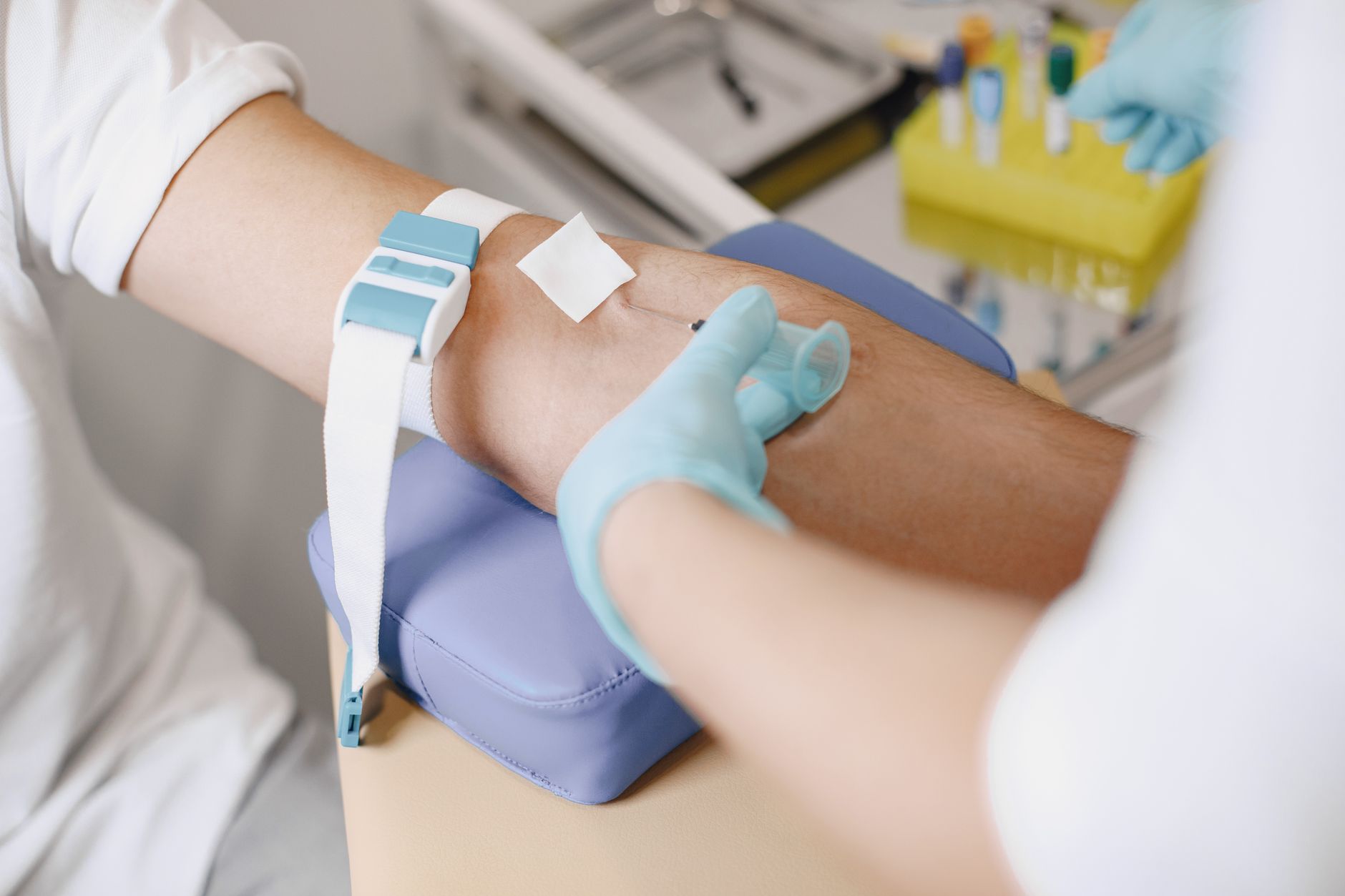
- Collecting and preparing blood and other specimens for lab tests.
- Scheduling appointments and entering vitals and test results into medical records.
- Keeping medical and office supplies stocked.
What you may do varies by state, which is why injections and some lab tests depend on state law. Your specialty shapes the day too: the BLS notes that medical assistants working for ophthalmologists show patients how to insert, remove and care for contact lenses.
Programs train for this mix. Of the 1,340 verified programs, 657 teach phlebotomy, 570 teach EKG, 468 teach pharmacology and 365 teach billing and coding. Only 28 teach limited X-ray.
What Makes a Strong Medical Assistant
The BLS names five qualities that matter in the job:
- Analytical skills, to understand medical charts and diagnoses.
- Communication, to give patients important information, such as when scheduling appointments or explaining medical information.
- Compassion, for patients who are sick or injured and may be in pain or distress, and for their families.
- Attention to detail, because physicians, patients and insurance companies rely on accurate vital signs and records.
- Interpersonal skills, to discuss patient information with physicians and other professionals and to stay courteous with patients.
Programs build the technical side through medical terminology, anatomy and pharmacology courses, usually with supervised practical experience. The externship adds supervised work with real patients before you graduate.
Where Medical Assistants Work
Most medical assistants work in outpatient care:
- Physicians’ offices: 56%
- Hospitals: 17%
- Outpatient care centers: 10%
- Offices of other health practitioners, such as chiropractors and optometrists: 8%
Most work full time. The BLS notes that some work evening, weekend or holiday shifts in medical facilities that are open around the clock.
Medical Assistant Pay, From Entry Level to the Top Tenth
- 10th percentile
- $36,050
- 25th percentile
- $38,470
- Median
- $45,690
- 75th percentile
- $49,180
- 90th percentile
- $59,310
National annual wages for 817,870 medical assistants (SOC 31-9092), BLS OEWS May 2025. The median hourly wage is $21.97.
Medical Assistant Pay by State
| State | Median pay | Middle half earns | Medical assistants employed |
|---|---|---|---|
| MA programs in Washington | $59,290 | $49,310 to $63,590 | 19,500 |
| MA programs in Alaska | $52,560 | $48,930 to $61,510 | 2,140 |
| MA programs in District of Columbia | $51,050 | $47,740 to $59,850 | 2,260 |
| MA programs in Minnesota | $50,480 | $47,220 to $58,540 | 10,580 |
| MA programs in Oregon | $50,410 | $47,170 to $59,160 | 11,840 |
| MA programs in California | $49,660 | $46,240 to $61,870 | 117,060 |
| MA programs in Massachusetts | $49,460 | $46,910 to $58,100 | 14,880 |
| MA programs in Wisconsin | $48,680 | $46,370 to $55,000 | 13,810 |
| MA programs in Hawaii | $48,410 | $45,290 to $55,940 | 3,890 |
| MA programs in Colorado | $48,400 | $45,280 to $55,570 | 13,160 |
| MA programs in New Hampshire | $48,020 | $45,090 to $51,580 | 3,000 |
| MA programs in New York | $48,000 | $43,600 to $55,120 | 40,710 |
| MA programs in Maine | $47,580 | $45,420 to $51,460 | 4,480 |
| MA programs in Connecticut | $47,430 | $45,180 to $50,210 | 10,250 |
| MA programs in Nebraska | $47,370 | $42,860 to $50,010 | 2,380 |
| MA programs in Vermont | $47,250 | $45,550 to $50,130 | 1,140 |
| MA programs in New Jersey | $47,210 | $42,150 to $49,920 | 20,330 |
| MA programs in Rhode Island | $47,190 | $45,370 to $48,630 | 3,210 |
| MA programs in Montana | $46,820 | $40,900 to $48,960 | 2,460 |
| MA programs in Maryland | $46,410 | $39,390 to $49,110 | 16,390 |
| MA programs in Illinois | $46,090 | $38,970 to $49,460 | 20,260 |
| MA programs in North Dakota | $45,980 | $39,090 to $54,620 | 600 |
| MA programs in Arizona | $45,940 | $40,370 to $48,450 | 21,460 |
| MA programs in Iowa | $45,480 | $38,980 to $48,030 | 5,990 |
| MA programs in Utah | $45,360 | $38,460 to $48,170 | 9,990 |
| MA programs in Nevada | $45,200 | $38,270 to $47,330 | 7,760 |
| MA programs in North Carolina | $45,140 | $38,490 to $47,500 | 23,650 |
| MA programs in Indiana | $45,110 | $39,160 to $47,290 | 19,630 |
| MA programs in Virginia | $44,740 | $38,840 to $46,570 | 16,650 |
| MA programs in Idaho | $44,700 | $37,780 to $48,160 | 5,250 |
| MA programs in Delaware | $44,490 | $38,750 to $46,890 | 2,880 |
| MA programs in Pennsylvania | $43,920 | $38,950 to $46,490 | 23,050 |
| MA programs in Florida | $43,680 | $37,830 to $46,800 | 66,110 |
| MA programs in Ohio | $42,810 | $38,060 to $46,270 | 28,950 |
| MA programs in South Dakota | $41,870 | $37,730 to $45,870 | 1,340 |
| MA programs in Georgia | $41,600 | $36,910 to $46,870 | 28,780 |
| MA programs in South Carolina | $41,160 | $37,290 to $46,950 | 12,110 |
| MA programs in Wyoming | $40,920 | $36,770 to $46,900 | 1,040 |
| MA programs in Missouri | $40,440 | $37,380 to $46,600 | 13,050 |
| MA programs in Michigan | $39,870 | $37,420 to $46,020 | 27,810 |
| MA programs in Tennessee | $39,570 | $37,160 to $45,580 | 19,180 |
| MA programs in Texas | $39,520 | $36,520 to $46,180 | 75,340 |
| MA programs in Kansas | $39,510 | $37,050 to $46,380 | 5,510 |
| MA programs in Kentucky | $39,270 | $36,560 to $45,940 | 13,440 |
| MA programs in New Mexico | $39,230 | $37,240 to $45,970 | 5,400 |
| MA programs in Oklahoma | $38,750 | $36,600 to $45,630 | 10,510 |
| MA programs in Arkansas | $37,760 | $35,700 to $42,900 | 5,150 |
| MA programs in West Virginia | $37,180 | $35,540 to $41,140 | 4,540 |
| MA programs in Louisiana | $36,320 | $32,020 to $38,550 | 12,310 |
| MA programs in Alabama | $36,100 | $32,390 to $38,360 | 13,300 |
| MA programs in Mississippi | $35,360 | $31,200 to $38,190 | 3,340 |
BLS OEWS May 2025, state annual wages, highest median first. BLS publishes state figures for 51 states and DC. Each state link goes to that state's verified programs.
Which Workplaces Pay Medical Assistants the Most
Your employer type changes your pay as well as your day. The BLS reports these median annual wages by industry for May 2025:
| Workplace | Median annual wage | Share of medical assistant jobs |
|---|---|---|
| Outpatient care centers | $48,560 | 10% |
| Hospitals (state, local and private) | $46,910 | 17% |
| Offices of physicians | $45,520 | 56% |
| Offices of other health practitioners | $38,400 | 8% |
Physicians’ offices employ most medical assistants and pay close to the national median. Outpatient care centers and hospitals pay more. Hospitals are the kind of around-the-clock facility where the BLS says some medical assistants work evening, weekend or holiday shifts. Offices of other health practitioners, such as chiropractors, pay the least of the four.
If pay is your priority, combine the two levers: a higher-paying state and an outpatient center or hospital employer. If you want predictable weekday hours, a physician’s office gives you that at close to the median wage.
Job Outlook for Medical Assistants
The BLS projects employment of medical assistants to grow 13% from 2025 to 2035, much faster than the average for all occupations. It expects about 109,700 openings a year over the decade, from new jobs plus workers who retire or change careers.
For comparison, nursing assistant employment is projected to grow 3% over the same decade. With about 109,700 openings a year, new graduates enter a field that is hiring steadily in every state.
How to Get Your First Medical Assistant Job
Through a Training Program
Most people train first. A certificate or diploma has a median length of 39 to 40 weeks, and most end with a clinic externship. The median externship is 180 hours. The externship puts you in a working clinic under supervision, and it gives an employer a first reference for you.
A few online and hybrid options show the range:
- Herzing University-Madison’s online diploma: 10 months, $12,720 in total tuition, with a 180-hour externship over 8 weeks. It prepares students for the CCMA.
- Bryan University’s online clinical certificate: about 8 months for $18,650, covering phlebotomy and coding, with one NHA exam attempt included.
- Orion Technical College’s online diploma: as few as 10 months for $15,940 in tuition and fees.
The how to become a medical assistant guide walks through every step, and the program matcher finds programs near you.
Through On-the-Job Training or an Apprenticeship
Entry-level jobs that train you do exist. The BLS says some medical assistants start with a high school diploma and learn on the job. Experience then opens certification routes:
- The CCMA from NHA accepts 1 year of supervised medical assisting work within the last 3 years.
- The RMA from AMT accepts 3 years of full-time medical assistant work within the past 7, with both clinical and administrative duties.
- The CMA (AAMA) Alternative Pathway accepts graduates of qualifying postsecondary medical assisting apprenticeship programs, as well as programs outside CAAHEP or ABHES accreditation.
On-the-job training is slower to a credential: the RMA work route takes 3 years, against a median of about 40 weeks for a certificate or diploma.
Certification and Hiring
Most states don’t require certification, but the BLS notes that employers may prefer or require it. Read the postings near you to see which credential local employers name.
Four national credentials exist: the CMA (AAMA), RMA (AMT), CCMA (NHA) and NCMA (NCCT). The CMA (AAMA) standard route requires a CAAHEP- or ABHES-accredited program, and 339 of the 1,340 verified programs qualify. Check one with the accredited program checker, compare all four exams in the medical assistant certification guide, or read the CMA certification guide.
Medical Assistant Career Path
Medical assisting is a starting point with several directions:
- Specialty practices. Specialty offices such as ophthalmology use medical assistants for specialty tasks, like teaching patients contact lens care.
- Phlebotomy and lab work. Phlebotomists earned a median of $45,230 in May 2025, close to medical assistant pay.
- Billing, coding and office leadership. The 365 programs that teach billing and coding give you a base for front-office and revenue roles.
- Nursing. LPN programs typically take about 1 year and end with a licensing exam. The LPN median was $64,400 in May 2025.
| Role | Median pay, May 2025 | Employed |
|---|---|---|
| Licensed practical nurse | $64,400 | |
| Medical assistant | $45,690 | 817,870 |
| Phlebotomist | $45,230 | 143,540 |
| Nursing assistant | $42,260 | 1,448,910 |
The LPN figure is from the BLS Occupational Outlook Handbook, and the others are BLS OEWS.
A degree helps if you plan to move up. Several schools let certificate or diploma graduates finish an associate degree online. Ross College-Grand Rapids North charges an $11,207 published total for students who completed its MA diploma. Miller-Motte College-Chattanooga quotes $7,840 to complete with 72 transfer credits, in as little as 4 to 6 months, for its Medical Clinical Assistant graduates.
How to Choose Training That Pays Off
- Check your state’s median first. Pay ranges from $35,360 to $59,290 by state, so a program’s cost should make sense for local wages.
- Keep the cost in proportion. Medical assistant programs have a median cost of $14,650. A public college program often costs far less. See medical assistant school cost.
- Pick the credential employers near you ask for. If postings name the CMA (AAMA), choose an accredited program.
- Look for phlebotomy and EKG. Blood draws and specimen collection are core BLS-listed duties, and these skills are taught in 657 and 570 programs.
- Ask where externs get placed. The externship is your first supervised clinical work and your first reference.
Comparing medical assisting with other entry-level roles? Read medical assistant vs CNA, or check how long medical assistant school takes.
Frequently Asked Questions
How Much Does a Medical Assistant Make an Hour?
The national median was $21.97 an hour in May 2025. State medians range from $17 an hour in Mississippi to $28.50 an hour in Washington.
Can You Get a Medical Assistant Job Without Certification?
In most states, yes. The BLS notes that most states don't require certification, but employers may prefer or require it. Some states do set rules, so the BLS advises checking with your state licensing agency.
Can You Become a Medical Assistant Through On-the-Job Training?
Some people do. The BLS says some medical assistants enter with a high school diploma and learn on the job. Work experience can later qualify you for certification: the NHA's CCMA accepts 1 year of supervised medical assisting work within the last 3 years, and the AMT's RMA accepts 3 years of full-time work within the past 7.
Do Certified Medical Assistants Earn More?
The BLS OEWS survey reports pay for all medical assistants together and doesn't split it by certification. Certification matters more for getting hired, since many employers prefer or require it.
Is Medical Assisting a Good Step Toward Nursing?
It can be. LPN programs typically take about 1 year and end with a licensing exam, and the BLS median for LPNs was $64,400 in May 2025. A medical assistant associate degree adds general education credits you may be able to transfer.
What Is the Top Pay for Medical Assistants?
Nationally, the top 10% earned $59,310 or more in May 2025. In Washington, the 90th percentile was $74,200, and in California it was $77,300.
Keep Reading
- How to Become a Medical AssistantThe training, externship, certification and state rules that take you from no experience to your first medical assistant job
- Medical Assistant CertificationThe four national medical assistant certifications, who can sit each exam and which programs prepare you for them
- CMA (AAMA) CertificationWho can sit the CMA (AAMA) exam, why accredited programs matter for it, and how the CMA compares with the CCMA
- CCMA (NHA) CertificationThe NHA's Certified Clinical Medical Assistant exam, its eligibility routes and the programs that prepare you for it
- How Long MA School TakesHow many weeks, clock hours and credits medical assistant programs take, by credential, from verified program pages
- Medical Assistant School CostWhat medical assistant programs cost by credential and school type, from published totals and rates, and how to pay for it
Sources
- BLS OEWS May 2025: Medical Assistants
- BLS Occupational Outlook Handbook: Medical Assistants
- BLS OEWS May 2025: Nursing Assistants
- BLS OEWS May 2025: Phlebotomists
- BLS Occupational Outlook Handbook: Licensed Practical and Licensed Vocational Nurses
- AAMA: CMA (AAMA) Alternative Pathway
- AMT: Registered Medical Assistant (RMA)
- NHA: Certified Clinical Medical Assistant (CCMA)
- U.S. Bureau of Labor Statistics, Occupational Employment and Wage Statistics, May 2025: Medical Assistants (31-9092)
- BLS Occupational Outlook Handbook: Medical Assistants