Certification
CMA Certification: How to Become a Certified Medical Assistant (AAMA)
How Do You Get CMA Certification?
CMA certification means passing the CMA (AAMA) Certification Exam from the American Association of Medical Assistants, and the standard route requires a medical assisting program accredited by CAAHEP or ABHES. Only 339 of the 1,340 programs verified for this site are accredited, while 450 name the CMA as a goal, so check accreditation before you enroll. Students and recent graduates pay $125 and can register once classroom coursework is done. Find qualifying programs with the accredited program checker.
What CMA Certification Means
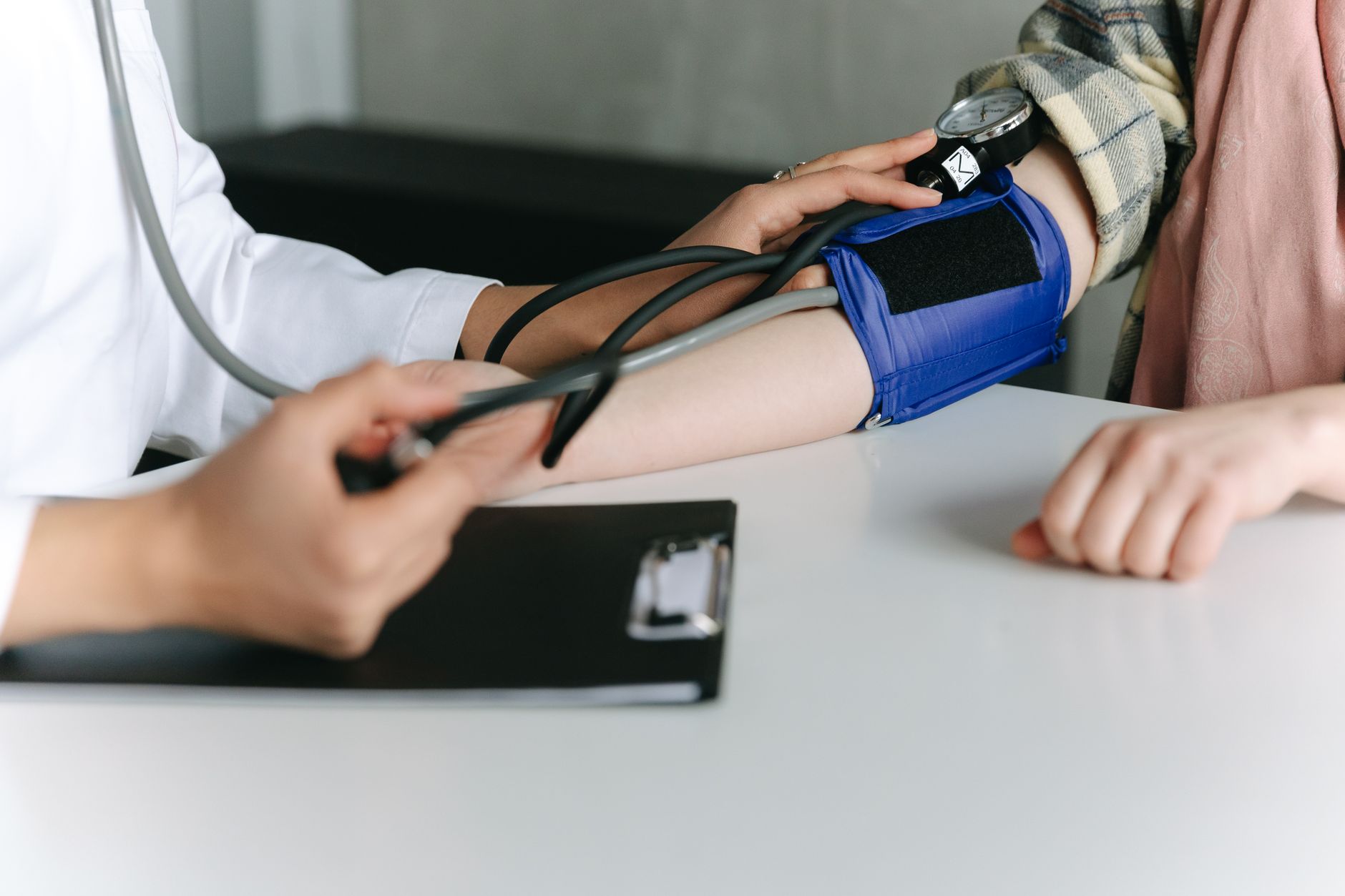
The CMA (AAMA) is the Certified Medical Assistant credential awarded by the American Association of Medical Assistants. You earn it by passing the CMA (AAMA) Certification Exam. Of the four national medical assistant credentials, it is the one programs name most often: 450 of the 1,340 programs verified for this site list it as a goal.
What sets it apart is the entry rule. The other credentials, the RMA, CCMA and NCMA, accept graduates of a wide range of programs or people with work experience. The CMA’s standard route accepts only students and graduates of programs accredited by CAAHEP or ABHES.
CMA Certification Requirements: Who Can Take the Exam
The AAMA lists five ways to qualify. Most readers will use the first or third.
| Route | Who it fits | What you need | Fee |
|---|---|---|---|
| Student or recent graduate | You are in, or finished within 12 months, a CAAHEP- or ABHES-accredited program | Classroom coursework complete; your program director verifies completion, including the practicum | $125 |
| Earlier graduate | You finished an accredited program more than 12 months ago | Official transcript | $125 members, $250 nonmembers |
| Alternative Pathway | You finished a qualifying program that isn’t CAAHEP or ABHES accredited | Transcript and signed attestation showing the requirements below | $125 members, $250 nonmembers |
| Recertification by exam | You held the CMA (AAMA) before | Prior CMA | $125 members, $250 nonmembers |
| Educator | You taught or directed an MA program for 1,000 hours or more | Supervisor attestation | $125 members, $250 nonmembers |
Two details help students. First, you can register as soon as classroom coursework is done, so many people test before the externship ends. Second, if your program earned accreditation while you were enrolled, or within 36 months after you graduated, you still qualify.
Programs That Name the CMA vs Programs That Qualify
This is the trap that costs people the most. Plenty of schools say their program prepares you for the CMA, but saying it doesn’t make a program accredited.
Of the 450 programs that name the CMA, 200 are CAAHEP or ABHES accredited. Of the 339 accredited programs, 200 name the CMA, and the rest name other exams or none, though their graduates still qualify by the standard route.
Some well-known programs name the CMA without accreditation:
- UEI College-Phoenix runs an 810-clock-hour diploma with a 250-hour externship for a published $20,900 and names the CMA, RMA and NCMA.
- The College of Health Care Professions-Northwest in Texas runs a 36-week, 900-clock-hour certificate with a 180-hour externship for $18,500, and names the CMA.
- San Jose City College’s clinical certificate names the CMA, RMA and NCMA, and is estimated at $1,426 (published rate times credits, before fees).
Graduates of programs like these would apply through the Alternative Pathway, which requires:
- the equivalent of two semesters with at least 560 academic contact hours, not counting the externship;
- a practicum of at least 160 hours in an outpatient setting, or 1,000 hours of medical assisting work after finishing;
- a diploma, certificate or associate degree from an institution accredited by an agency recognized by the U.S. Department of Education or CHEA;
- coursework in anatomy, physiology, pharmacology, infection control, math, injections and phlebotomy, with at least 10 injections and 10 blood draws performed.
The review of your documents is free, but approval depends on meeting every rule. An accredited program skips that uncertainty.
Accredited Programs Worth a Look
Accredited programs are not the expensive option. Across the 92 accredited programs that publish a total, the median is $7,700, compared with $18,459 across the 190 CMA-naming programs that publish one. North Carolina has the most accredited programs, 45, followed by Georgia and Ohio with 24 each and Washington with 21.
| Program | State | Length or hours | Externship | Cost | Published outcome |
|---|---|---|---|---|---|
| Lake Technical College certificate | FL | About 30 weeks, 900 clock hours | 190 hours | $2,592 published total | Exam passage 96.5% (2020-2024) |
| Pasadena City College certificate | CA | 11 months full time, 40 units | $1,840 estimated | ||
| Anoka Technical College diploma | MN | Two semesters plus externship, 33 credits | 280 hours | $7,592 published total | Exam passage 93.98% (five-year average) |
| University of Alaska Fairbanks certificate | AK | 36-37 credits | Practicum, 4 credits | $9,036 estimated | Exam pass rate 93.44% (2020-2024) |
| Ivy Tech technical certificate | IN | 2-3 semesters, 39 credits | $6,957 published total | Evansville CMA pass rate 97.18% (2020-2024) | |
| Kirkwood Community College diploma | IA | 4 semesters, 43 credits | Ambulatory clinic practicum | $9,847 published total | CMA exam passage 81.40% (five-year average) |
Blank cells mean the program’s page doesn’t state that item. Estimated costs are the published rate times credits, before fees.
For a schedule around a day job, Cabarrus College of Health Sciences in North Carolina runs an accredited 11-month diploma on evenings and weekends, for a published $15,111. Of the 339 accredited programs, 33 offer evening classes and 5 weekends. None is fully online, though 78 are hybrid. Browse by state on the North Carolina, Georgia and Ohio pages, or compare every option on the accredited programs page.
What the Certified Medical Assistant Exam Costs and How It Runs
The fee is $125 if you are a current student or apply within 12 months of graduating. After that, AAMA members pay $125 and nonmembers $250.
The exam is delivered in four 40-minute segments. You choose a PSI test center or live remote proctoring, where a proctor watches by video while you test from home or school. Once approved, you have a 90-day window to sit the exam, and you can reschedule up to 24 hours before your appointment.
CMA (AAMA) Eligible Programs by State
319 CAAHEP-accredited and 20 ABHES-accredited programs (directories captured October 12, 2026), matched to the schools on this site. Graduates of these programs meet the AAMA's standard education route to the CMA (AAMA) exam.
How to Prepare for the CMA Exam
Start with the AAMA’s own materials. Its Exam Content Outline lists the number and percent of questions in each major content area, so you can weight your study time. The AAMA practice exam has 10 modules of 20 questions each, 200 questions in total.
A few habits help:
- Test while coursework is fresh. Register as soon as your classes are done; you don’t have to wait for the externship to end.
- Study by content area. Use the outline to find your weak areas, the same way the practice modules break them out.
- Check your program’s record. Some programs publish CMA pass rates, such as Ivy Tech’s Evansville campus at 97.18% over five years. A program with a strong record is a good sign its review covers the exam.
Keeping Your CMA Current
The credential lasts 60 months. To renew, you either earn 60 continuing education points or pass the exam again.
The points have rules: at least 30 must be AAMA CEUs, with at least 10 administrative, 10 clinical and 10 general, and the remaining 30 from any mix. Renewing by continuing education costs $80 for AAMA members and $160 for nonmembers. Renewing by exam costs $125 or $250. If your credential has expired, reactivation adds $50.
CMA vs CCMA: Which Should You Choose?
The CCMA from the National Healthcareer Association is the CMA’s most common alternative. Here is how they compare:
| CMA (AAMA) | CCMA (NHA) | |
|---|---|---|
| Program requirement | CAAHEP or ABHES accredited, or the Alternative Pathway | Any medical assistant training program finished within 5 years |
| Work experience route | None for new candidates | 1 year within 3, or 2 years within 5 |
| When students can test | After classroom coursework | After the program, or after coursework at schools with an NHA agreement |
| Renewal | Every 60 months, 60 CE points | Every 2 years, 10 CE credits |
| Testing options | PSI center or live remote proctoring | School, PSI center or live remote proctoring |
| Programs naming it | 450 | 299 |
Choose the CMA if you can attend an accredited program; accredited graduates take it by the standard route, and it renews less often. Choose the CCMA if the right program for your schedule or budget isn’t accredited, or if you are qualifying through work. The CCMA certification guide covers that exam, and the medical assistant certification page compares all four credentials, including the RMA and NCMA.
Where the CMA Counts
Most states don’t require certification. Where state rules do name exams, the CMA is on the list:
- Washington: the Department of Health accepts the CMA (AAMA), along with the RMA, NHA’s clinical medical assistant exam, the NCMA and AMCA’s exam, toward its Medical Assistant-Certified credential, if passed within five years before you apply.
- California: medical assistants need no certification to work, but a “qualified medical assistant” who trains others must be certified by a Board-approved organization. The AAMA is one of five on that list.
The BLS reports a median wage of $45,690 a year for medical assistants in May 2025, or $21.97 an hour. The medical assistant careers guide covers where certified medical assistants work.
Your CMA Checklist
- Confirm the program is CAAHEP or ABHES accredited with the accredited program checker, not the school’s marketing.
- Ask when the program lets you register: after classroom coursework is the AAMA rule.
- Apply within 12 months of graduation to keep the $125 fee without membership.
- If your program isn’t accredited, gather your transcript and attestation for the Alternative Pathway review before you pay for the exam.
- Put your recertification date on a calendar: 60 months from certification.
Not sure the CMA is the right first step? The how to become a medical assistant guide covers the whole path, and the certification pathway tool shows every credential you qualify for.
Frequently Asked Questions
Can You Take the CMA Exam Without Going to an Accredited School?
Sometimes. The AAMA Alternative Pathway accepts graduates of unaccredited postsecondary programs that meet its rules: at least 560 academic contact hours, a 160-hour externship or 1,000 hours of work afterward, an accredited institution, and documented training in injections and phlebotomy. The documentation review is free, but approval isn't guaranteed.
How Long Do You Have to Take the CMA Exam After Graduating?
There is no deadline, but timing changes the fee. Graduates who apply within 12 months pay $125. After 12 months, graduates of an accredited program pay $125 as AAMA members or $250 as nonmembers.
Is a CMA the Same as a CNA?
No. The CMA (AAMA) is a medical assistant credential from the American Association of Medical Assistants. A CNA is a certified nursing assistant, a separate role. The medical assistant vs CNA guide compares the training, work and pay.
Can You Take the CMA Exam Online?
You can take it by live remote proctoring, watched by video from home or school, or at a PSI test center. Either way, the exam runs in four 40-minute segments and must be scheduled within a 90-day authorization window.
Does the CMA Expire?
Yes. CMAs (AAMA) recertify every 60 months, either with 60 continuing education points or by passing the exam again. Recertifying by continuing education costs $80 for AAMA members and $160 for nonmembers.
Is the CMA Accepted in California?
California doesn't require medical assistants to be certified. The AAMA is one of five certifying organizations approved by the Medical Board of California, which matters if you want to become a qualified medical assistant who trains others.
Keep Reading
- How to Become a Medical AssistantThe training, externship, certification and state rules that take you from no experience to your first medical assistant job
- Medical Assistant CertificationThe four national medical assistant certifications, who can sit each exam and which programs prepare you for them
- CCMA (NHA) CertificationThe NHA's Certified Clinical Medical Assistant exam, its eligibility routes and the programs that prepare you for it
- How Long MA School TakesHow many weeks, clock hours and credits medical assistant programs take, by credential, from verified program pages
- Medical Assistant School CostWhat medical assistant programs cost by credential and school type, from published totals and rates, and how to pay for it
- Medical Assistant vs CNAMedical assistants and nursing assistants compared on training, duties, workplaces, certification and BLS pay, with phlebotomists alongside
Sources
- AAMA: CMA (AAMA) exam eligibility and fees
- AAMA: Alternative Pathway
- AAMA: Testing options
- AAMA: Prepare for the exam
- AAMA: Recertification
- NHA: Certified Clinical Medical Assistant (CCMA)
- Washington State Department of Health: Medical assistant recognized exams
- Medical Board of California: Medical assistants
- BLS Occupational Outlook Handbook: Medical Assistants
- CAAHEP, accredited medical assisting programs, captured October 12, 2026
- ABHES, directory of programmatically accredited programs, captured October 12, 2026
- American Association of Medical Assistants: CMA (AAMA) exam